
Santa Fe
This page is part of Henry’s USA Rail Trip – it also includes San Juan, Taos, San Ildefonso, Bandelier National Monument and Los Alamos.
Tuesday September 2nd – Saturday September 6th 1958

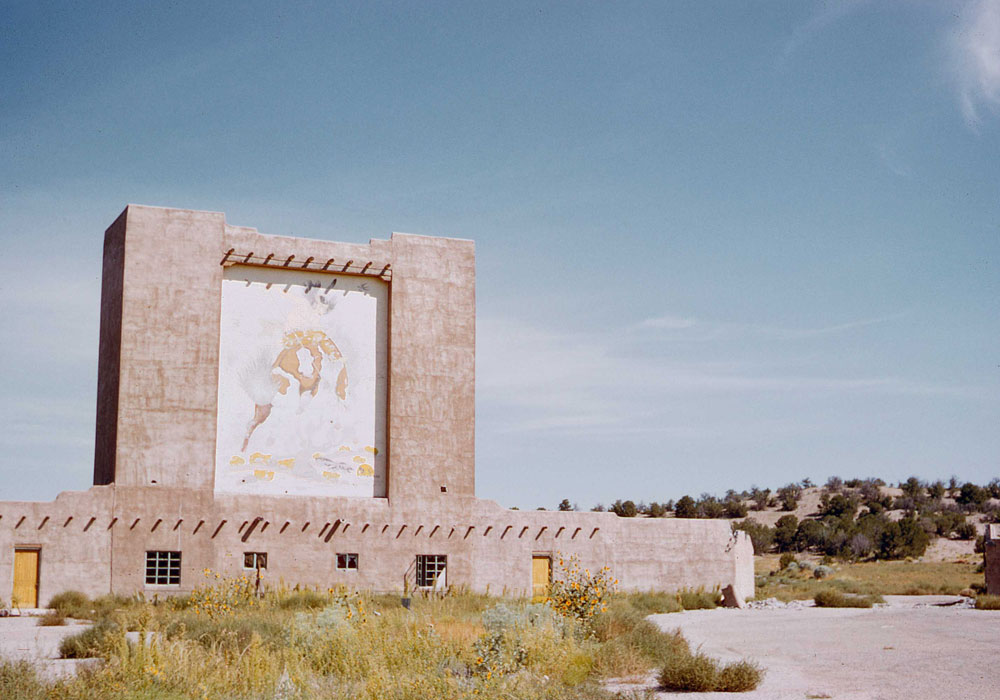
I spent two days in the town, part of the time in the very interesting museums which dealt mainly with Indian affairs.
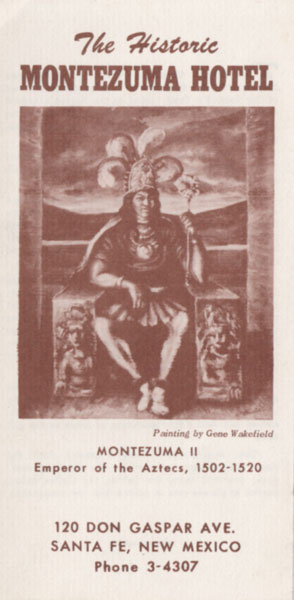
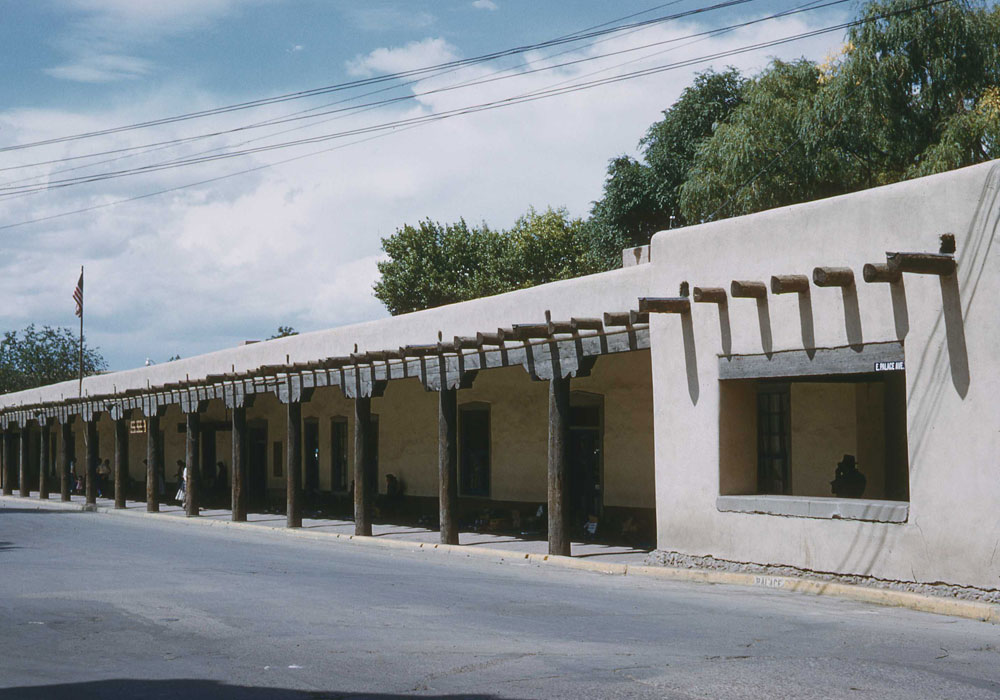
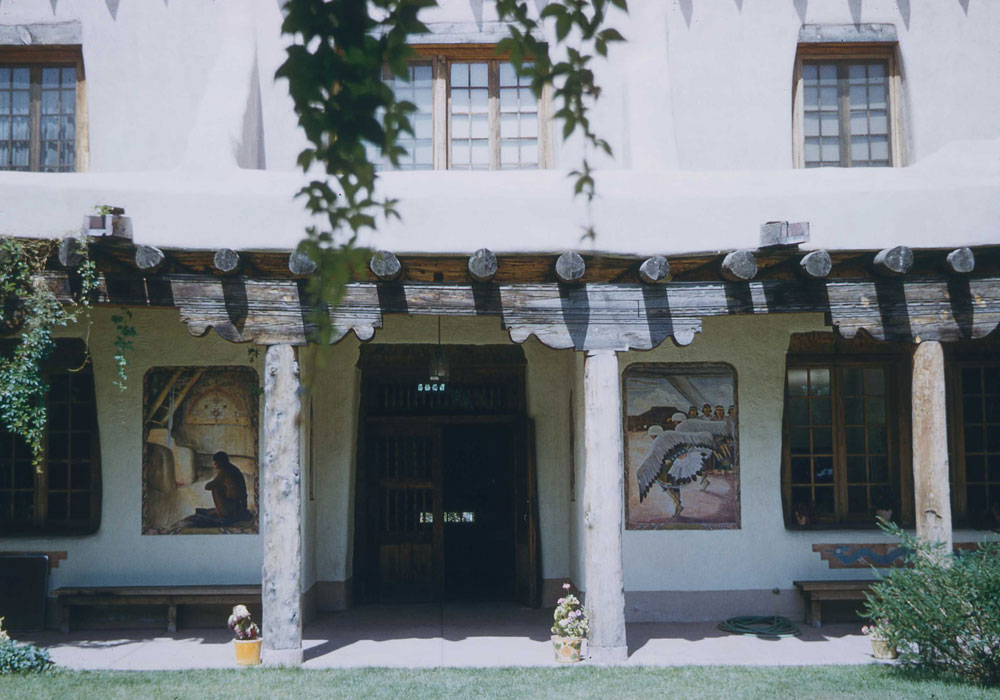
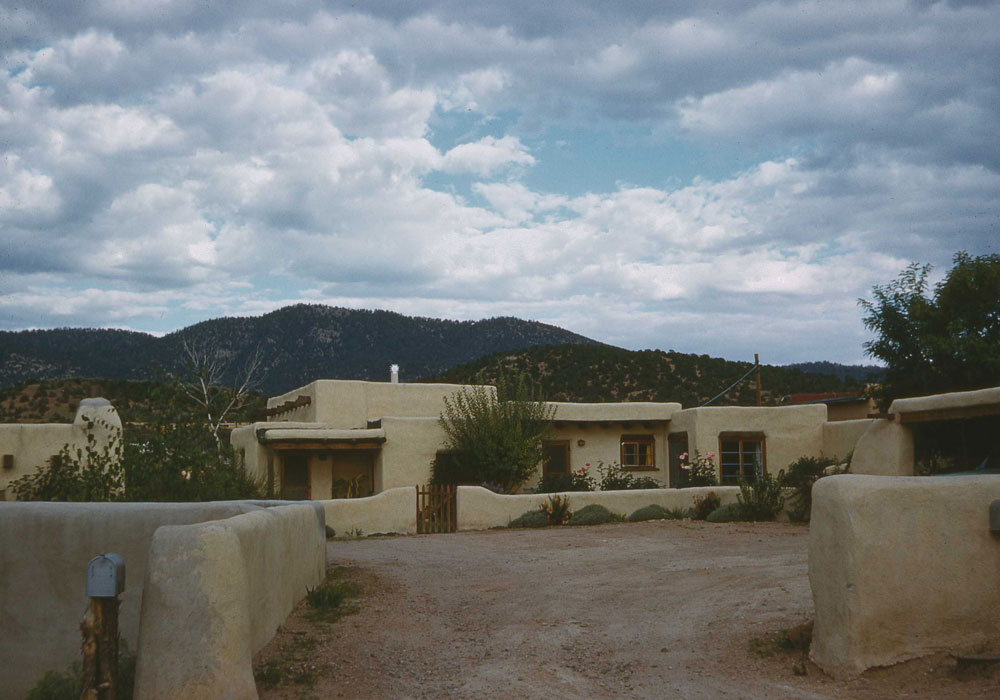
On the third day went on a tour to an Indian village called Taos, about 80 miles away, by limousine. This was arranged through my hotel, by word of mouth arrangement with an old chap who kept a gift shop – he had retired, and with a schoolmaster friend ran these tours. The schoolmaster’s son drove us on this one.
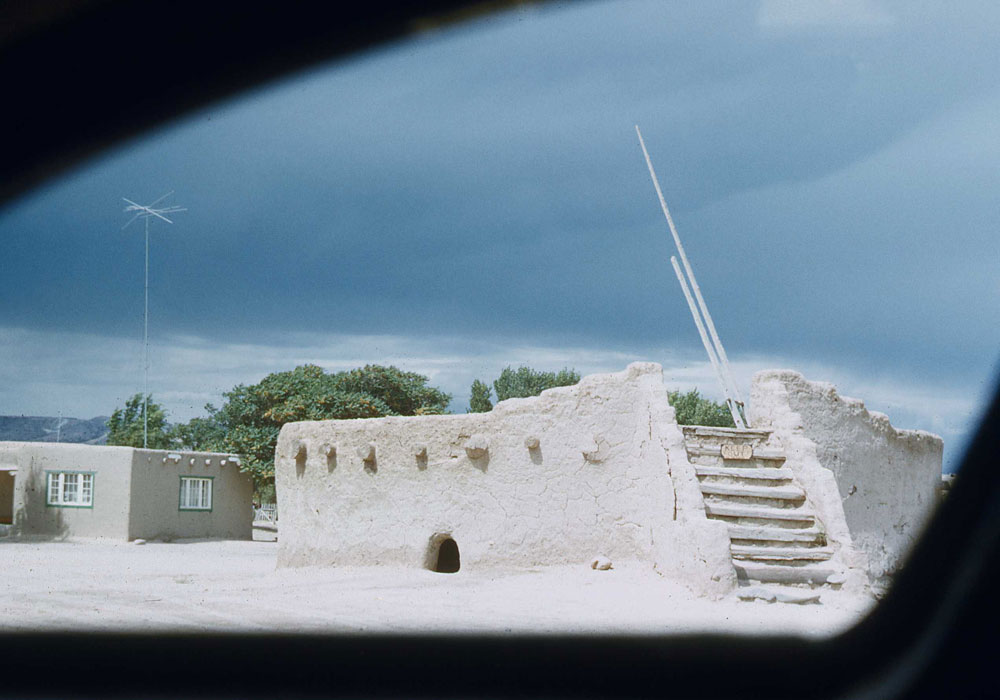
On our way to Taos we visited another Indian Village [San Juan, now known as Ohkay Owingeh] and saw some of the Indian women putting dough into one of their beehive-shaped ovens to bake same. This is only rarely done nowadays, most bread being bought, but this was a ceremonial occasion as one of the ladies daughters was to be married on the morrow.
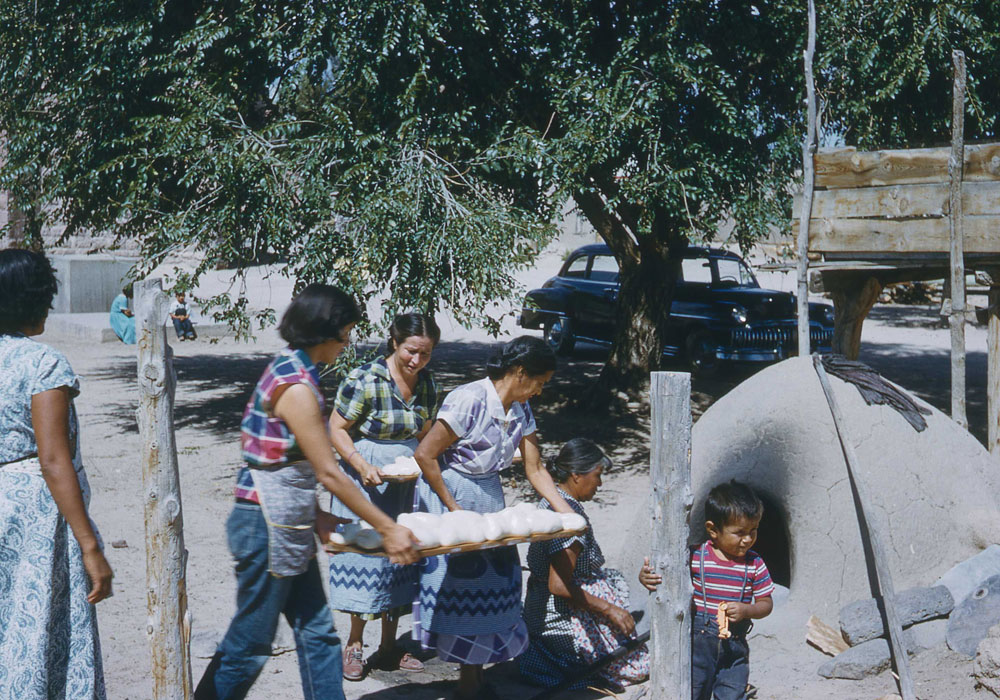
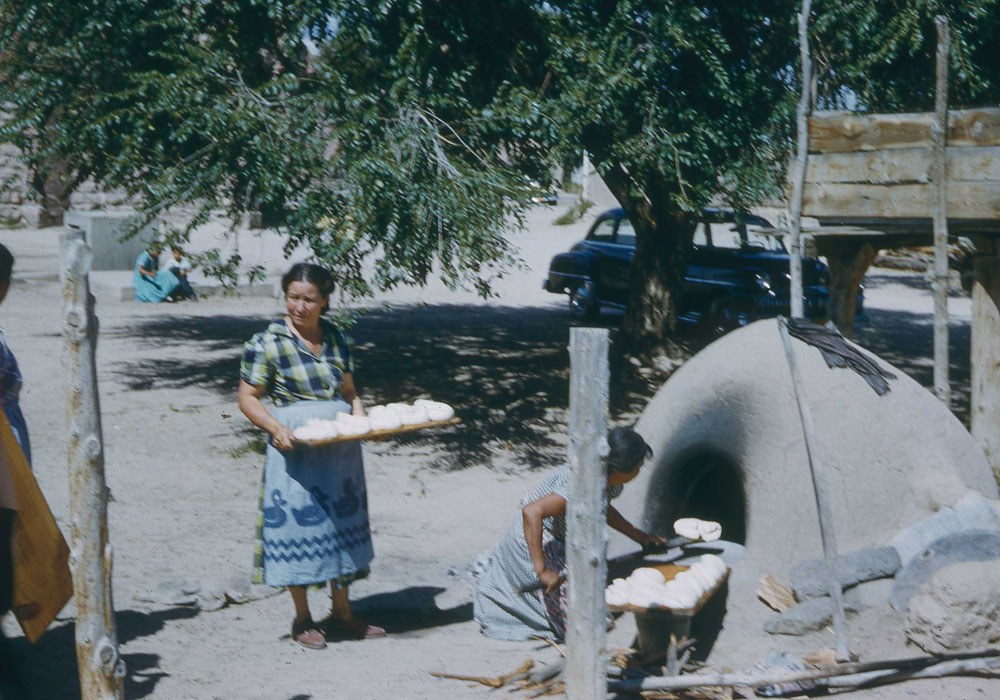
Women baking bread in a traditional beehive-shaped oven made from adobe (mud and straw). Bread is baked by building a wood fire inside the oven (called a horno), letting it heat thoroughly, sweeping out the embers, then placing the dough inside to bake in the retained heat.
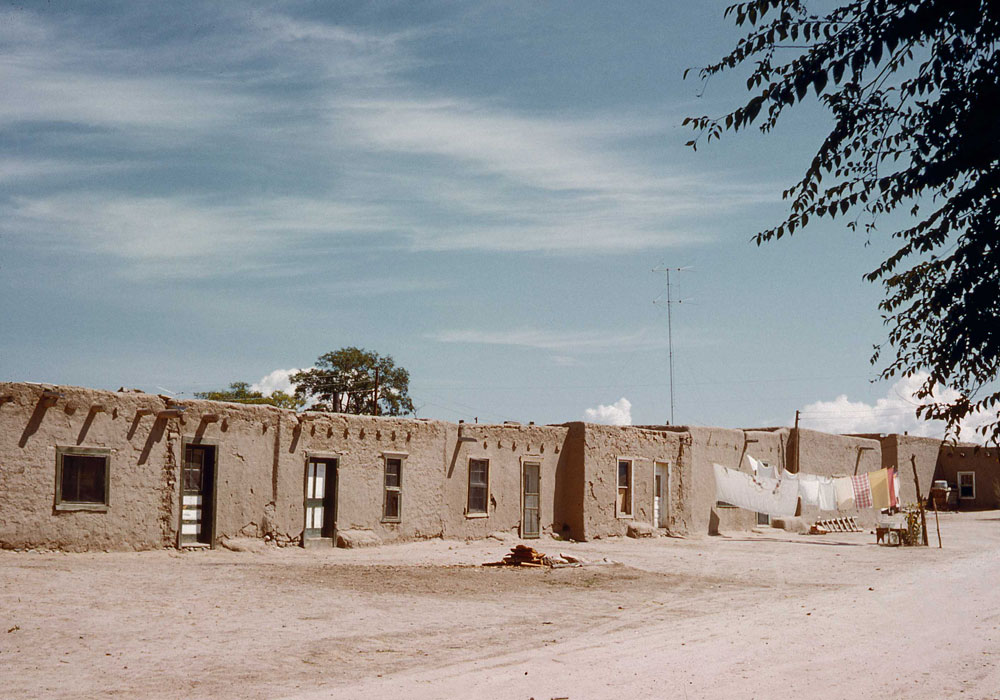
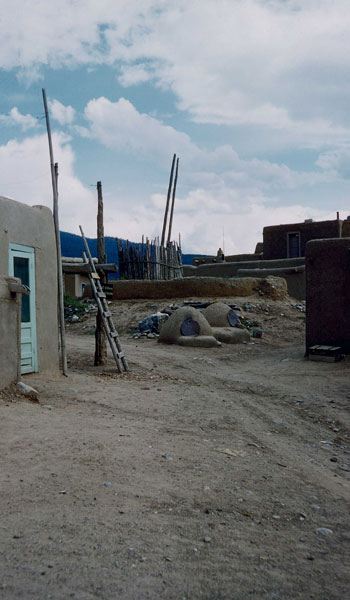
Taos is a Pueblo Indian village, which has existed for hundreds of years, built of adobe mud – mud mixed with straw.
The village is still lived in by the Indians, who charge no fee to visitors, except a dollar for each camera, which permits photography of buildings only. In order to take pictures of any of the people, a fee has to be paid to the person(s) concerned! Taos itself is an American Village, chiefly an artists colony – in fact I think there are more studios and shops selling all varieties of art from modern to Indian than in Chelsea SW. 3. I took a photo of the village plaza (square), a general view from across the road, it happened to include two Indians.
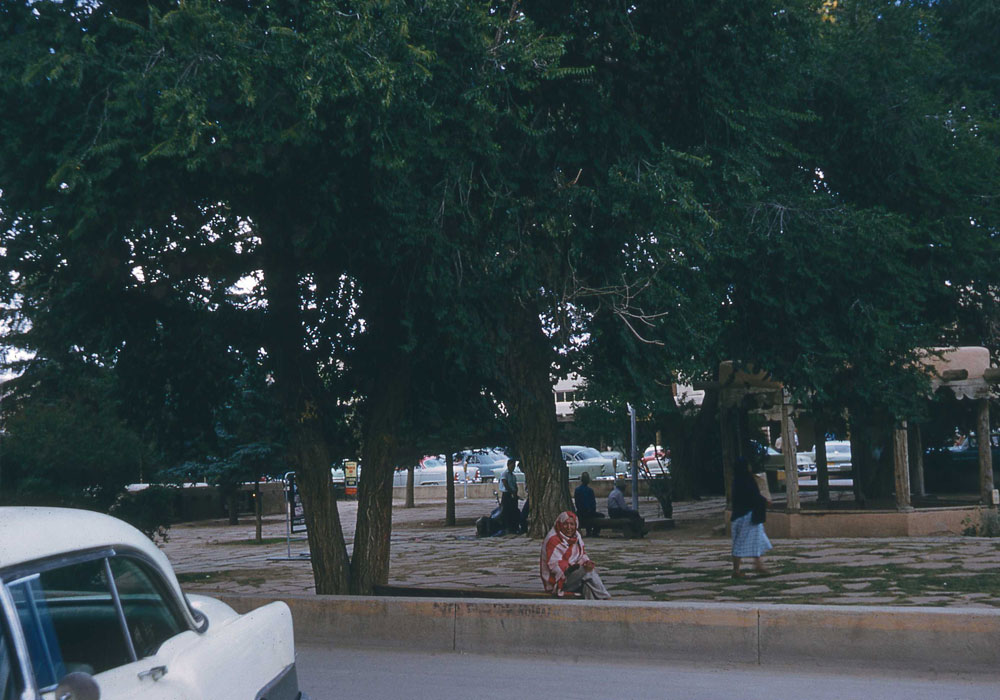
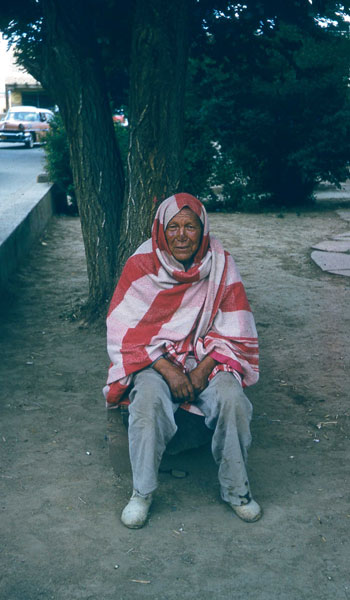
After I’d taken it, one of the Indians beckoned to me and asked 50 cents for taking his picture – I was so astonished I gave it to him, and then he composed himself for a close-up – which I suppose was his method of obtaining cash, because I’m positive now he couldn’t charge me for taking a general view with him in it!! I shall be very interested to see how these pictures turn out.
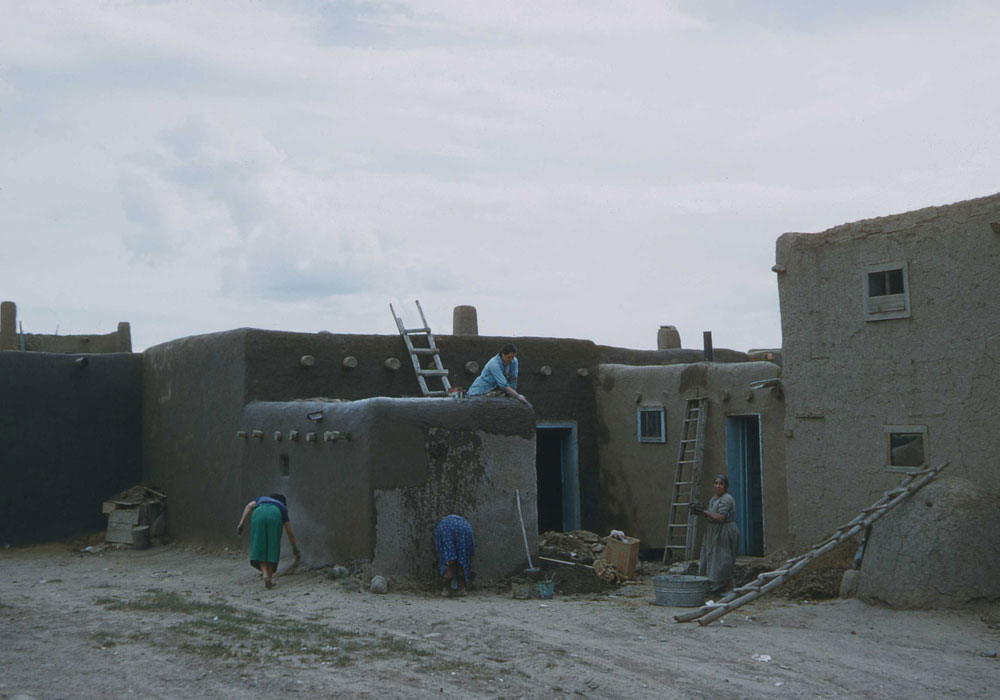
After a Mexican style lunch in Taos our guide took us to the Indian Village, where amongst other sights we saw some of the ladies re-facing some of the house walls with fresh mud. There is no piped water, nor electric light permitted by the tribal elders in this particular village. Many of the young people move outside it and set up houses in the usual American way. It really seemed to me a most incongruous situation, in the 20th Century for people, some of whom owned cars, to live in this way.
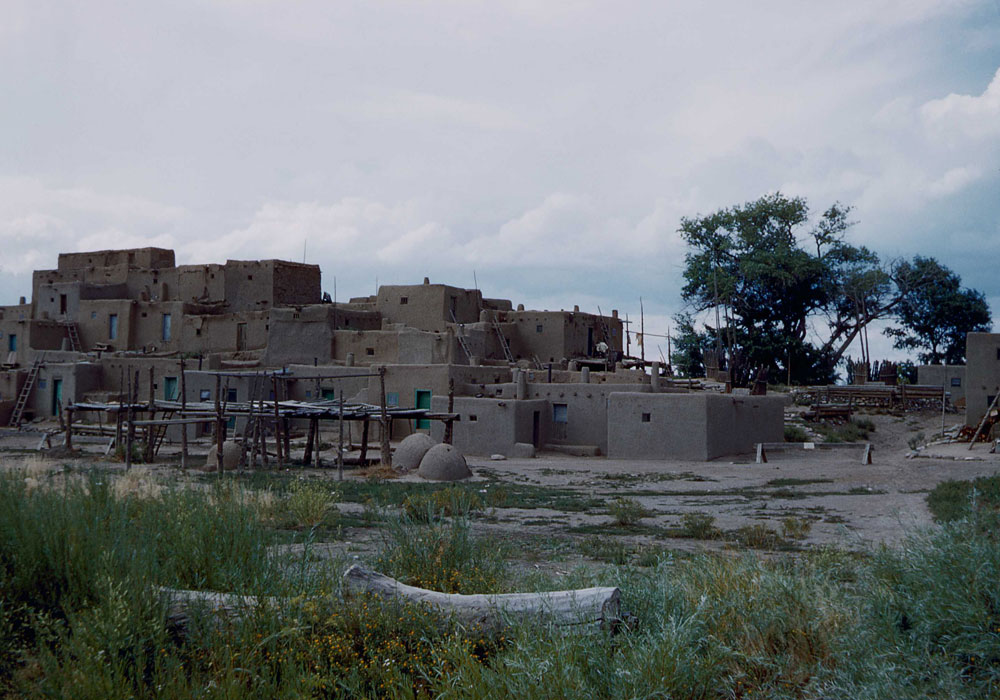
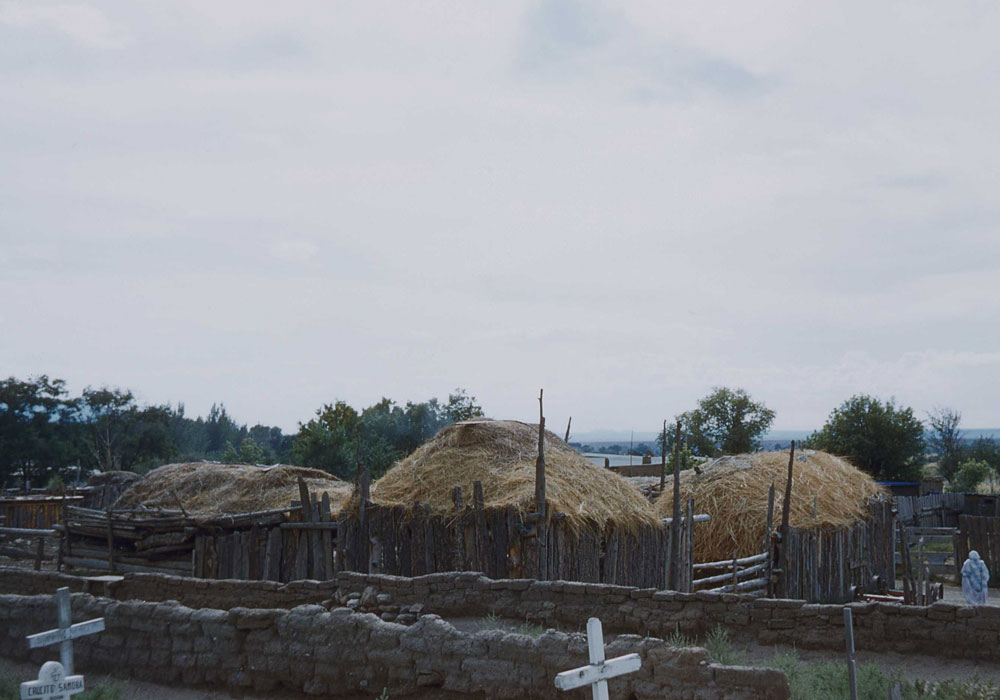
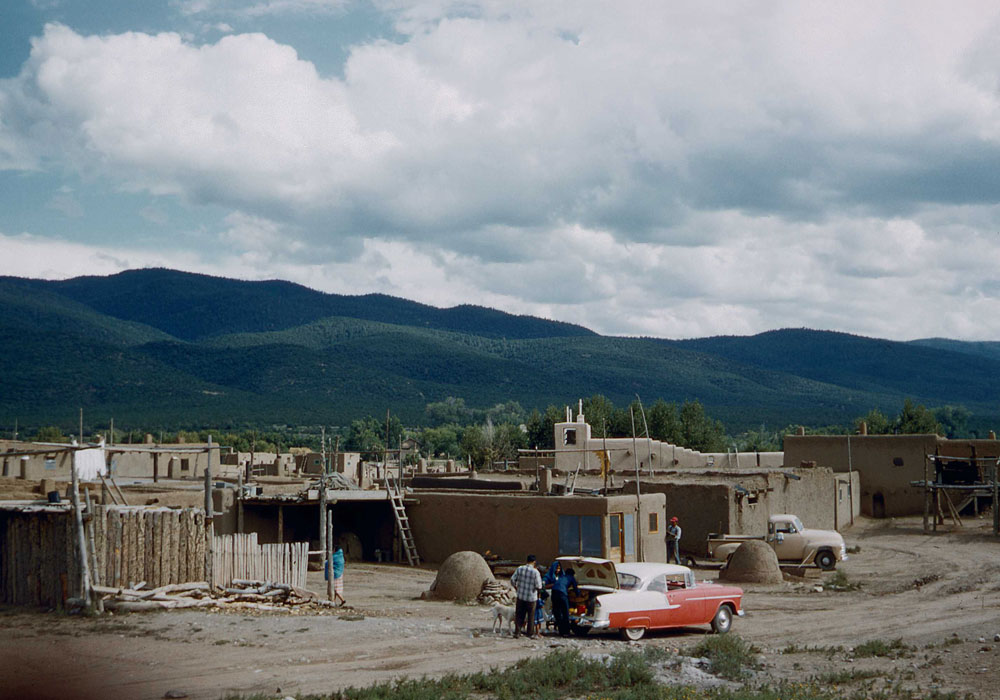
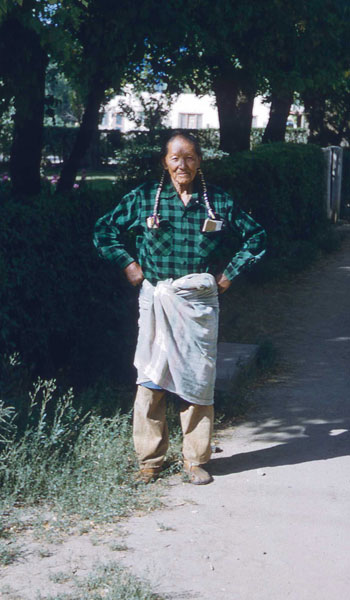
After leaving the Indian Village, I left the group to peep into a modern art studio someone had recommended, and on the way down the road an Indian beckoned me from across the street. So this time I shook my head, but he beckoned again and I crossed over – he wanted me to take his picture, the usual fee apparently being 50 cents. So having 18 cents change in my pocket I told him that’s all I had, – after a moment’s thought he agreed! Again I shall be most interested to see the results.
Returned to Santa Fe, and after supper was told at the hotel that a tour was to be arranged on the next day to a National Monument nearby (i.e. about 40 miles off), where cliff dwellings of Indians who lived in prehistoric times were preserved [Bandelier National Monument]. I had intended to press on to Grand Canyon – had in fact reserved a train seat – but decided to cancel it and go.
I arranged this one through the schoolmaster in a cafe near the hotel, who, hearing I was from England, asked if I know a Mr Dade at Kew? Yes I know a Major Dade at Kew, he is in charge of the fungus Collection!! Well, the schoolmaster knew Major Dade’s son very well, he was evacuated to Santa Fe during the war. And the priceless thing about this is that Major Dade wrote a fair number of letters to his son (then aged eight) and these letters were published by the University of New Mexico Press under the title of “To His Refugee Son” by H.A. Dade!! They contain a week by week account of life in Kew in 1940 and 1941, with the blitz and Home Guard, quite strong meat really for a young lad of eight. I wonder if you could find a copy, Dad? I read part of it that night, as the schoolmaster (Mr Malone) drove me up to his house and lent me the book for the night.
We returned via the bowling alley, and I saw an example of true American Democracy. “There is the Mayor of Santa Fe” said Mr. Malone, pointing to a chap sweeping the floor!! And he introduced him to me. I think the Mayor had a great interest in bowling, which is a popular N. American sport. This was a new alley, having room for 12 games – the game is really like skittles, these stand at the end of a long run and have to be all knocked down in one or two goes. The Mayor said the public liked the place to be clean!! There were another twelve alleys to be installed shortly. This alley was fully automatic, an example of perfect American ingenuity, after the skittles are knocked over, they are automatically gathered up and replaced, if some are knocked over the apparatus just removes those, leaving the rest standing! In Canada (Ottawa) boys are employed for this purpose.
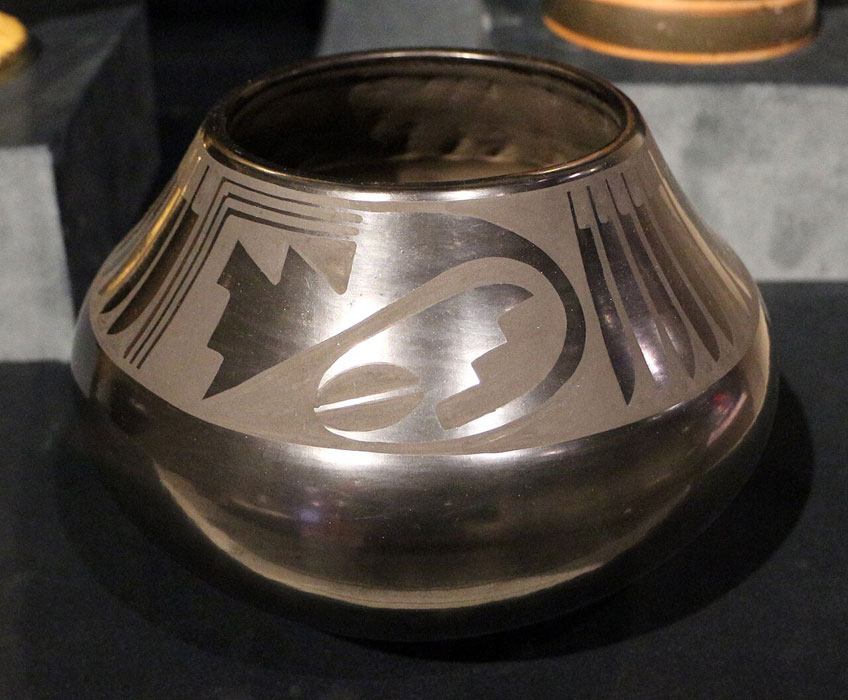
Well the next day we went to see these prehistoric Indian dwellings, they were actually built in the cliff face, as caves one above the other. On the way we visited another Indian present-day Village [San Ildefonso], which was famous for the superb pottery. This pottery is made simply by shaping with the hands, no wheel is used. Most of it is a beautiful lustrous black, which is put on during the heating process.
The “old chap” himself (i.e. Mr Copman who kept the Gift shop) led this tour – he must be nearing seventy (pardon!), drove the hundred odd miles there and back, and informed us of all matters of interest. He took us up to the cave dwellings, up fairly steep paths on foot. In a way he was like the late Mervyn G. Palmer, having wide knowledge of geology, archaeology and Indian affairs.
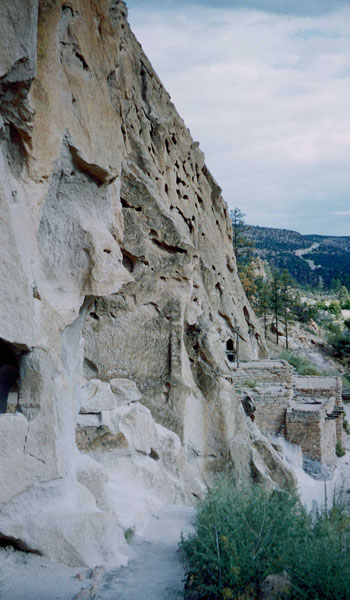
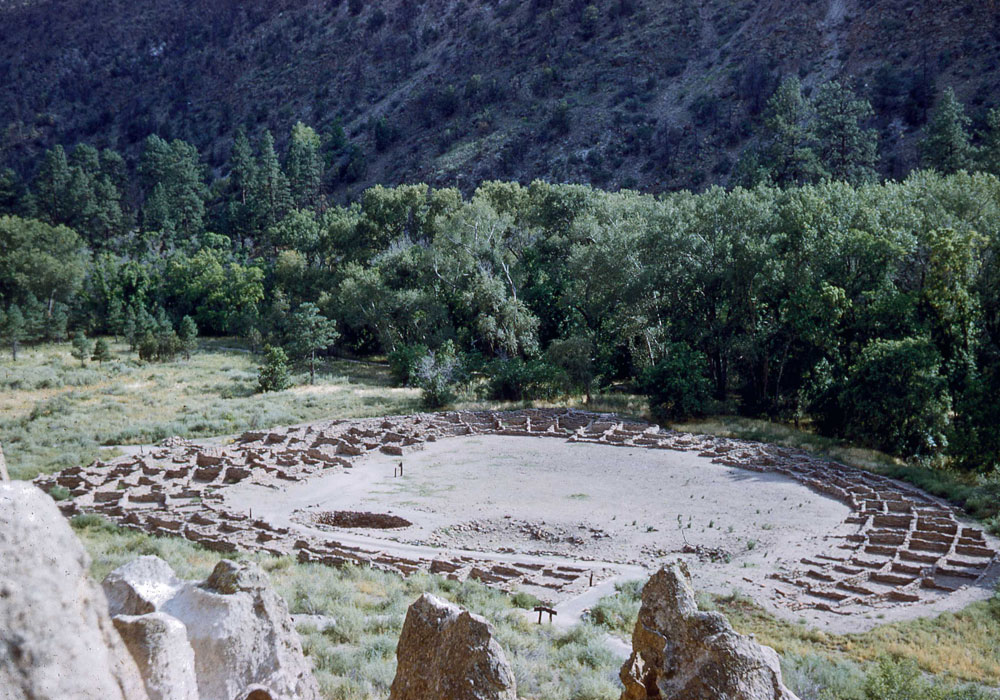
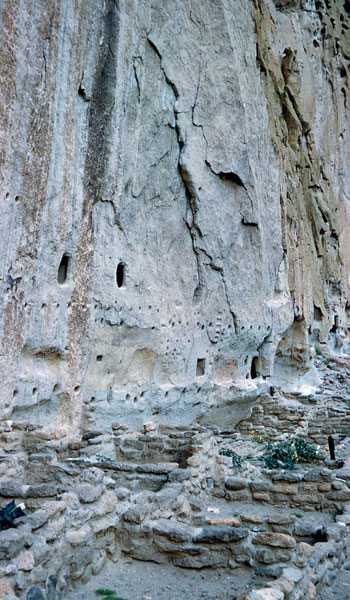
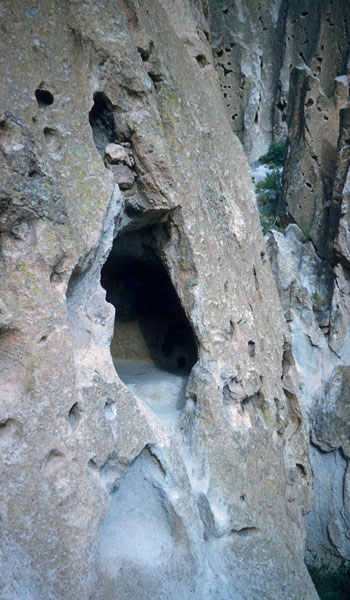
Cavates (cave dwellings) at Bandelier National Monument. These were hand carved into the soft volcanic tuff rock at Frijoles Canyon by Ancestral Pueblo people between the 12th and 16th centuries.
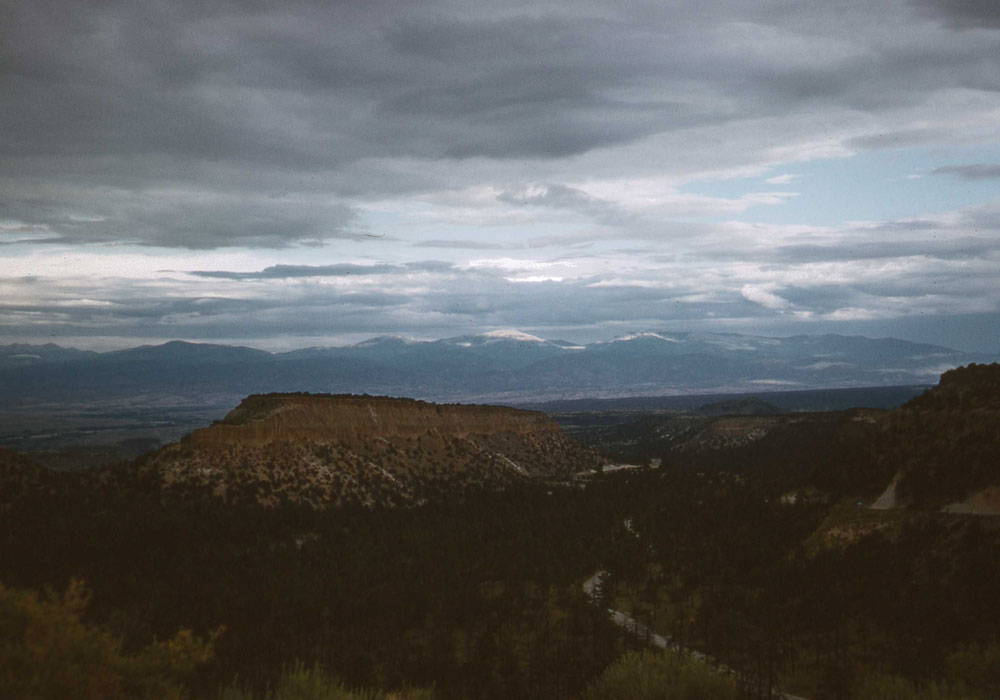
On our way back we went through the Atomic City, Los Alamos, where the first atomic bomb was made which until a few years ago was entirely closed to the general public. All the property in the city is owned by the Government, nobody is (or was) allowed to live there unless they are employed by the government, with the exception of those operating necessary services I suppose such as shopkeepers. All the housing accommodation for the scientific workers is as I said owned by the government, and allotted according to scientific status. Thus senior scientists have the most posh homes etc. class distinction!
On our return some of us had supper together and I sat up until a somewhat late hour chatting with a lass from New York. Mr Copman’s wife looked after the shop – I omitted to mention that two nights previous to this his wife had gone on a trip with two English girls who were touring in an ancient car, she had invited me up to his home for a bachelor supper of corned beef hash and beer! Hence the evenings went and my letter didn’t get written.